Regional Banking Preferences Shaping Software-Driven Bonus Eligibility in Mobile Table Games
Kai Perry · Nov 3, 2026
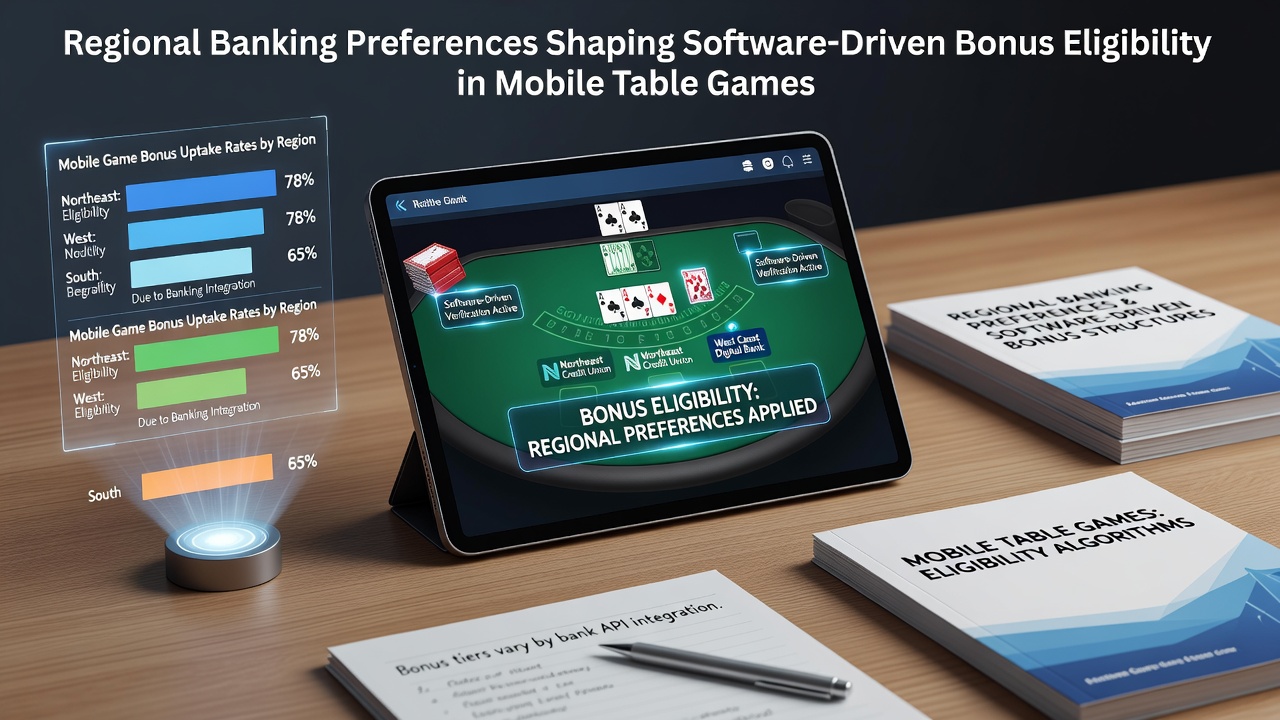
Regional Banking Preferences Shaping Software-Driven Bonus Eligibility in Mobile Table Games
Regional banking preferences have started to influence software algorithms that control bonus eligibility in mobile table games, and this connection has grown stronger as operators adapt platforms to local financial habits across multiple markets. Data from industry reports indicate that payment method selections now feed directly into eligibility checks for promotions tied to games like blackjack and roulette on portable devices, while developers adjust code to reflect regional norms in banking access and transaction speeds.
Regional Variations in Banking and Their Direct Link to Mobile Gaming Software
Banking preferences differ sharply by geography, and these differences feed into the decision trees that software uses when evaluating whether a player qualifies for table game bonuses. In North America, credit card and e-wallet combinations dominate mobile deposits, whereas parts of Europe lean toward instant bank transfers that complete in seconds, and Asian markets often favor mobile wallet integrations that tie into local telecom billing systems. Software providers have responded by building modules that scan the originating payment rail, and this scan determines if the deposit meets the criteria for bonus activation in games running on licensed mobile platforms.
Research from the American Gaming Association shows that transaction velocity and fee structures vary enough between regions to justify separate algorithmic branches, and these branches now affect bonus multipliers applied to table game wagers. Observers note that a deposit completed through a preferred regional rail can unlock eligibility flags that slower or higher-fee methods leave untouched, and this pattern holds across both iOS and Android deployments.
How Software Algorithms Translate Banking Data into Bonus Rules
Developers embed banking preference data into the same real-time decision engines that handle bonus eligibility, and the process works through layered checks rather than simple if-then statements. When a player initiates a deposit, the system records the payment provider, currency code, and completion timestamp, then cross-references those fields against a regional rule set stored on the backend. If the combination matches a pre-approved profile, the software sets an eligibility bit that later allows bonus funds to apply to table game rounds without additional verification steps.
Studies conducted by the University of Nevada, Reno Gaming Research Center reveal that these checks occur within milliseconds and run silently in the background, so players experience only the outcome rather than the logic. The same research indicates that operators update rule sets quarterly to reflect shifts in regional banking adoption, and updates released in November 2026 incorporated new data on emerging digital bank transfers in Canada and Australia.
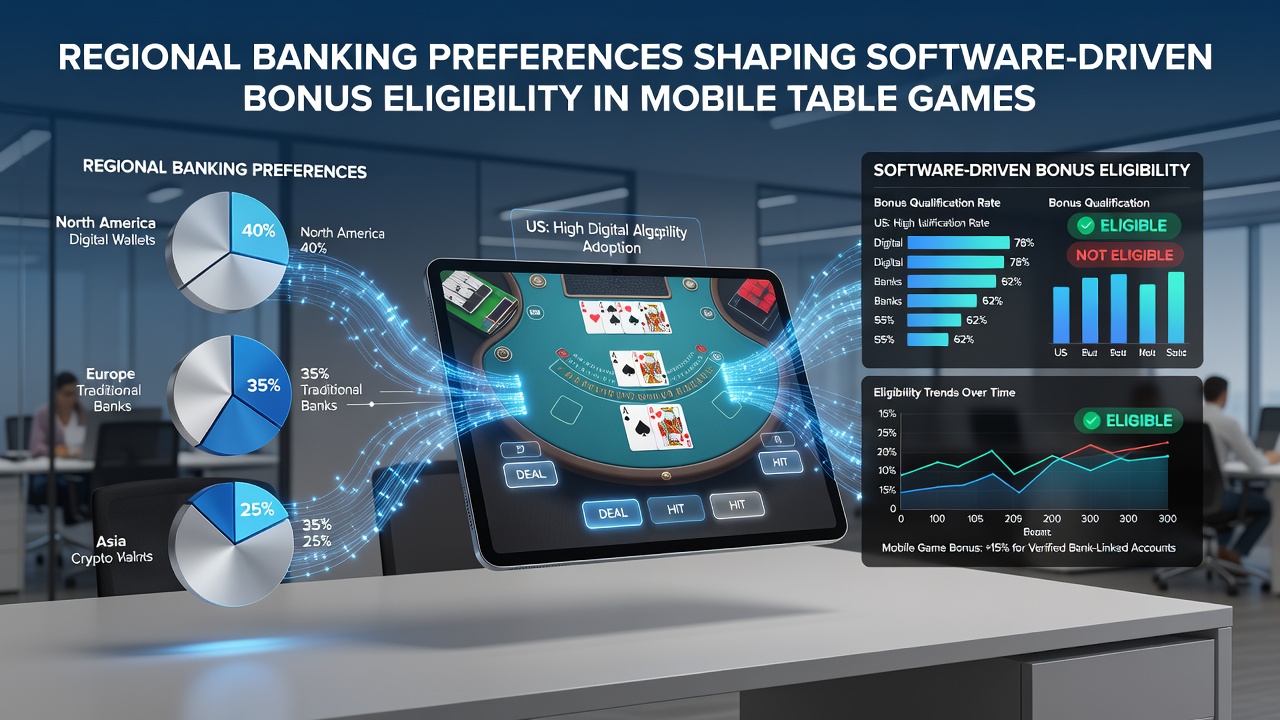
Because mobile table games often run on shared engines with live dealer and RNG variants, the banking filter applies across formats, yet eligibility outcomes can still differ based on game type and regional licensing requirements. European operators, for instance, must align with payment service directives that restrict certain high-risk instruments, and software automatically routes those restrictions into the bonus engine so ineligible deposits never trigger promotional credit.
Examples from Markets Where Banking Preferences Have Altered Bonus Structures
One documented case involves operators serving the Australian market, where instant bank transfers via the New Payments Platform have become the default; software updated in late 2025 now grants table game bonus eligibility within one minute of deposit confirmation when that rail is used. In contrast, deposits processed through international cards face an additional holding period before bonus funds activate, and this distinction appears only in the mobile client interface. Similar adjustments have appeared in Canadian provinces, where Interac e-Transfers trigger faster eligibility than legacy card methods because the regional system processes them at lower cost and higher speed.
Industry reports compiled by the European Gaming and Betting Association track how these regional filters have reduced bonus abuse while maintaining player engagement, and the data show measurable differences in redemption rates tied directly to payment origin. Software teams continue to refine the matching logic because banking preferences evolve, and each new preferred method requires fresh testing against existing bonus rules to avoid unintended eligibility gaps.
Current Developments Observed in November 2026
November 2026 brought fresh regulatory filings from several jurisdictions that highlighted the growing weight of regional banking data in software compliance checks. Operators submitted updated technical documents showing expanded lookup tables that now include digital wallet variants popular in Latin America and parts of Africa, and these tables feed directly into the bonus eligibility layer for mobile table games. teh filings also note that transaction success rates have improved where software aligns bonus rules with locally dominant rails, and regulators in those regions have begun requesting audit trails that link payment metadata to promotional outcomes.
Because mobile table games operate under tight latency constraints, the added checks must remain lightweight, and developers have achieved this by caching regional profiles on edge servers rather than querying central databases for every deposit. This architecture keeps the eligibility decision fast enough for seamless play while still respecting the banking preferences that shape each market.
Conclusion
Regional banking preferences now function as an input layer within the software that governs bonus eligibility for mobile table games, and the integration continues to deepen as payment ecosystems fragment along geographic lines. Data released through industry and academic channels demonstrate that operators who align their algorithms with these preferences achieve higher compliance rates and more consistent bonus distribution across player bases. The pattern established through 2026 suggests further refinement will follow as new banking rails gain traction, with software updates expected to incorporate those changes without altering the core table game experience for end users.